
Wondering why two Silver Lake homes with the same square footage can feel worlds apart? In this neighborhood, style and site often matter as much as size. The hills, reservoir views, and creative legacy shape everything from floor plans to daylight and resale appeal. In this guide, you’ll learn how the main architectural styles in Silver Lake look, live, and perform so you can spot value quickly and shop or sell with confidence. Let’s dive in.
Why Silver Lake’s style matters
Silver Lake’s steep slopes, ridgelines, and the reservoir create unique lot shapes and view corridors. That topography influences how architects position windows, terraces, and rooms. As a result, “style” here is inseparable from site and orientation.
You’ll see a mix of early 20th‑century homes, celebrated mid‑century modern hillside builds, and recent small‑lot infill. Historic preservation interest and modern renovation trends both influence what buyers value. When you evaluate a home, look at its style and how the plan uses the lot, light, and views.
Before renovating or buying, confirm permitting, seismic or hillside work, and any historic constraints. City resources like the Los Angeles Department of City Planning and the Department of Building and Safety can help you verify HPOZ status, permits, and small‑lot records.
Mid‑Century Modern (MCM)
Defining features and layout
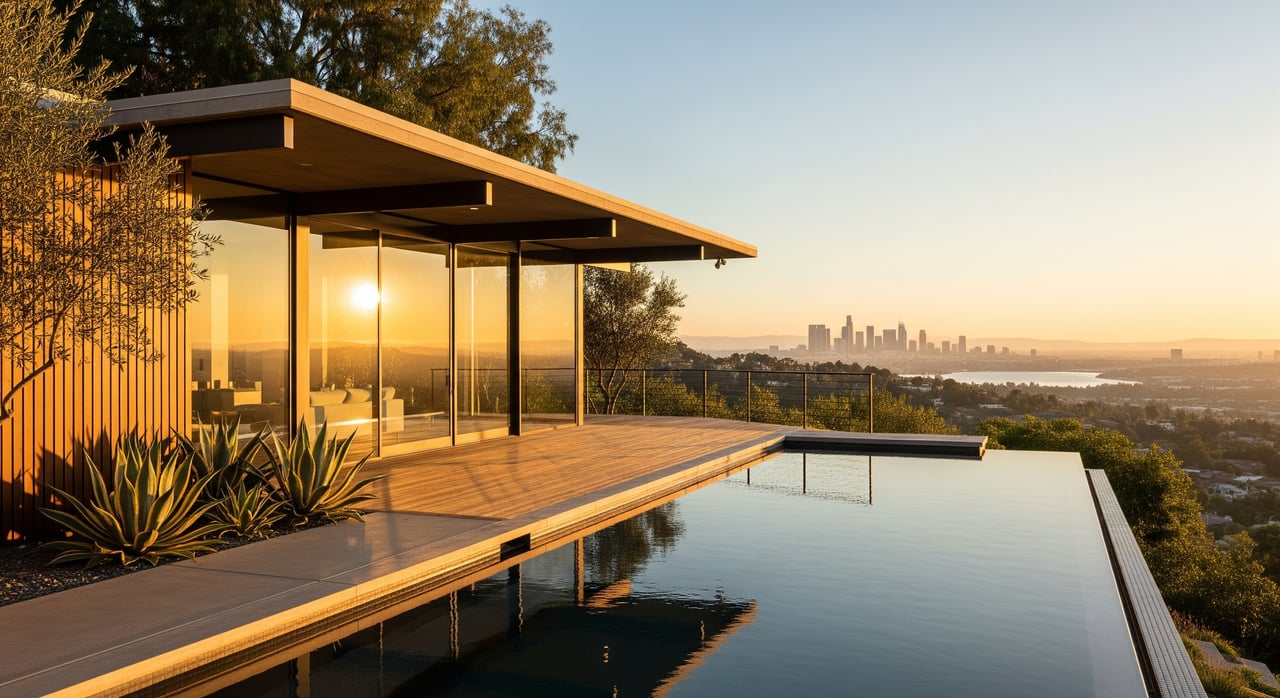
- Flat or low‑pitched roofs, broad eaves, post‑and‑beam structure, and large glass walls or clerestories.
- Open living/dining/kitchen flow with decks or terraces that extend entertaining space.
- Single level or split‑level plans that step with the slope and frame reservoir or hillside views.
Daylight and orientation
- Floor‑to‑ceiling glass and clerestories maximize daylight and long views.
- Deep eaves help control glare and heat. Orientation is often tuned to privacy and landscape.
What to watch
- Original single‑pane glazing and flat roofs may need upgrades for comfort and durability.
- Preserve authentic wood ceilings, built‑ins, and period detailing when possible. These features can drive premium interest.
Spanish Revival / Mediterranean Revival
Defining features and layout
- Smooth stucco walls, red clay tile roofs, arches, ironwork, and ornamental tile.
- More defined rooms than MCM, with courtyards and small patios that organize the plan and bring in light.
Daylight and orientation
- Smaller window openings and thicker walls moderate heat and create a calm, private feel.
- Courtyards, loggias, and recessed entries brighten interiors without sacrificing comfort.
What to watch
- Stucco and clay tile have different maintenance cycles than wood siding or composition shingles.
- Original plaster, tile, and ironwork add value. Roof and stucco repairs are common budget items.
Craftsman / Bungalow
Defining features and layout
- Low‑pitched gabled roofs, wide eaves with exposed rafters, tapered porch columns, and natural woodwork.
- Compact, efficient footprints with built‑ins and a strong street‑to‑porch connection.
Daylight and orientation
- Moderate‑sized windows and deep porches create softer, diffused light.
- Interiors feel cozy and defined rather than wide‑open.
What to watch
- Preserve original wood siding, trim, and built‑ins when possible. These are often selling points.
- Opening walls can improve flow but may remove character that buyers expect.
Contemporary small‑lot and hillside moderns
Defining features and layout
- Clean, rectilinear volumes with stucco, metal, or fiber‑cement siding and large glazing.
- Multi‑level stacking on narrow footprints, with stairs as a design feature and rooftop decks for outdoor space.
- Bedrooms often sit on lower or middle levels; living spaces rise to capture light and views.
Daylight and orientation
- Light wells, clerestories, and roof decks brighten deeper plans and maintain privacy on close lots.
- Strategic glazing balances views with screening from neighbors.
What to watch
- Energy performance is often better than older homes, but narrow floor plates can challenge daylight in interior rooms.
- Craftsmanship and plan livability drive long‑term value.
How style shapes living
Layout and flow
- MCM: Open flow is great for entertaining and daylight, with living areas oriented to views or courtyards.
- Spanish/Craftsman: Defined rooms offer acoustic privacy and a calmer feel, though interiors may be darker.
- Contemporary infill: Vertical living trades horizontal flow for rooftop decks and view‑oriented great rooms.
Daylight strategies
- MCM and contemporary homes lean on large glass walls and clerestories. Plan for shading and thermal upgrades where needed.
- Spanish and Craftsman homes use courtyards, porches, and recessed glazing to create cooler, softer light.
Usability and storage
- Open plans feel larger but may have fewer built‑ins.
- Traditional plans often include generous storage and millwork, which many buyers value.
Resale and renovation insights
- Buyer pools vary by style. Design‑focused buyers often seek authentic MCM or high‑quality contemporary work. Others prioritize period charm in Spanish and Craftsman homes.
- Authenticity and condition of character features can drive premiums. Restored woodwork, original tile, and intact built‑ins often stand out.
- Sensitive modernization pays off. Update glazing, HVAC, plumbing, and roofs while retaining defining details.
- Check for HPOZ or similar overlays before changing exteriors. Small‑lot subdivision status, ADUs, and permitted additions can also affect value and timelines.
Quick checklists
For buyers touring in Silver Lake
- Spot style cues: roof type, window type, built‑ins, porches or courtyards, and post‑and‑beam details.
- Study light and orientation: where do living spaces face, and how do they capture views and sun?
- Ask about roof age, window upgrades, hillside drainage, seismic work, and permit history.
- Test functionality: bedroom and bath locations, parking access, outdoor space, and ADU potential.
For sellers preparing to list
- Highlight authentic features and any high‑quality system upgrades.
- Use photography that shows indoor/outdoor flow, light, and views.
- For period homes, include detail shots of tile, ironwork, beams, and documented restoration.
For everyone: inspection and permits
- Gather records for roof, HVAC, electrical, and foundation/seismic work.
- Confirm permits for additions, conversions, and ADUs.
- On hillside lots, review drainage, grading, and any prior foundation or landslide repairs.
Ready to explore Silver Lake homes?
If you value architecture as much as address, pairing the right style with the right site can elevate daily life and long‑term value. Whether you’re buying, selling, or planning a thoughtful renovation, you deserve guidance that blends design insight with local market know‑how. Connect with Carolina Kramer to compare homes by style, light, and livability, and to map the smartest next steps for your move. (Se habla Español.)
FAQs
How to spot a good renovation in Silver Lake?
- Look for cohesive materials and proportions, quality finishes, and documented permits. Poor work often ignores original rooflines, window rhythms, or creates awkward circulation.
Are mid‑century modern homes always single level?
- No. Many are split‑level or multi‑story hillside designs. What defines them is materiality, glazing, and indoor‑outdoor connection.
Are Spanish Revival or Craftsman homes cheaper to maintain?
- Not always. Stucco and tile can be durable but need specialist repair; wood siding and trim require periodic painting and care.
Will a contemporary small‑lot home be harder to resell?
- It depends on execution. Well‑designed plans that solve for daylight, privacy, and outdoor space typically perform well; generic builds can be tougher to position with traditional buyers.