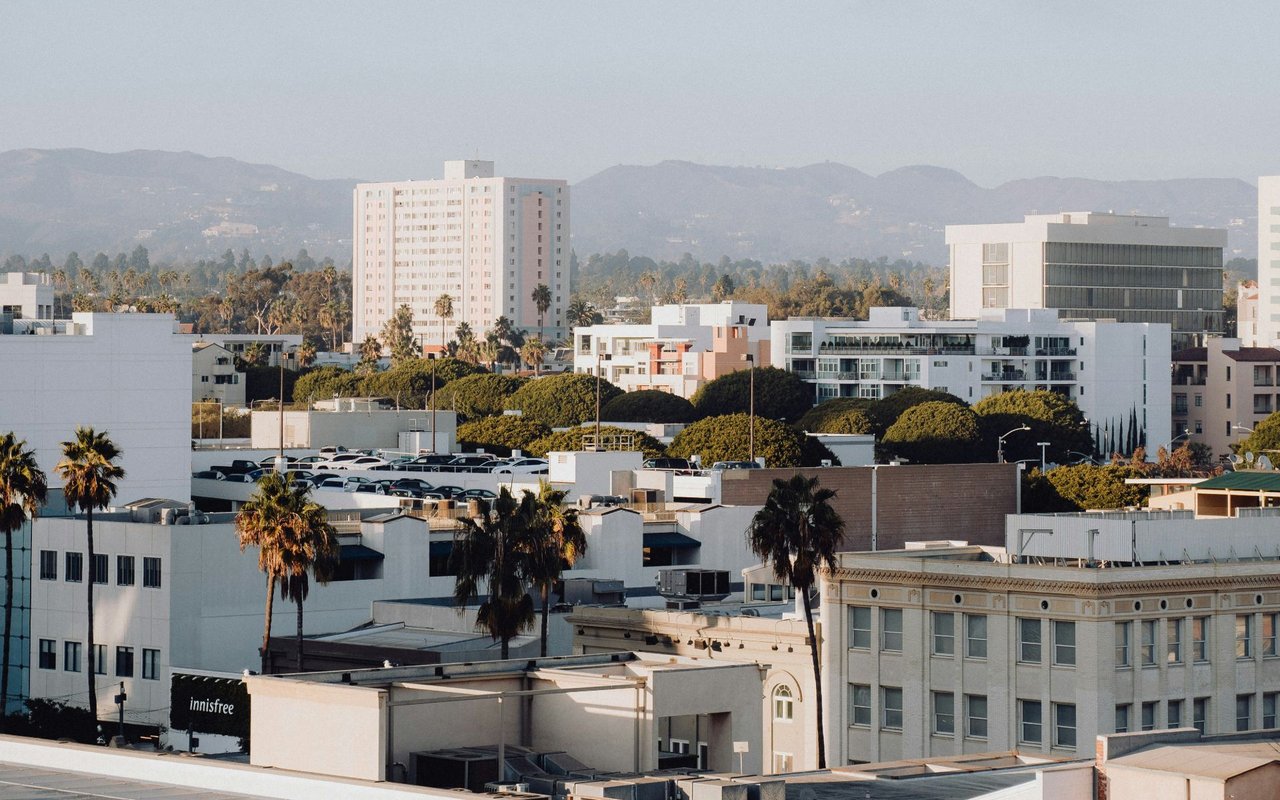
Melrose is best understood as a corridor, not a single neighborhood. Melrose Avenue runs east-west from the Beverly Hills/West Hollywood border all the way to Lucile Avenue in Silver Lake — bisecting multiple LA neighborhoods along the way. But when Angelenos say "Melrose," they usually mean the Melrose District: the retail and residential zone centered on the avenue’s intersection with Fairfax Avenue, spilling into nearby blocks of walkable, Mid-City residential streets. In 2026, this area trades as a Mid-City address with serious walkability, a long cultural reputation, and some of the most eclectic retail in Los Angeles.
Melrose Avenue was paved in 1909 and named by developer Elmanson Avery McCarthy after his parents’ birthplace in Melrose, Massachusetts. Before the street existed, the area was citrus groves. The transformation into a retail district happened in stages — but the identity that still defines Melrose was cemented in the early 1980s, when the eastern end (roughly Fairfax to Highland) became the center of LA’s underground, new wave, and punk-influenced fashion scene. Shops like Koala Blue, Retail Slut, Neo80, LA Eyeworks, Off the Wall, and Caffé Luna turned Melrose into a fashion destination that attracted designers, stylists, musicians, and the creative community that still shapes it today. For broader context, see the Fairfax District Wikipedia entry.
You can’t understand Melrose without understanding Fairfax. Historically, the Fairfax District has been the center of LA’s Jewish community, lined with delis, bookshops, and synagogues. Today, Melrose x Fairfax is a living layer cake: century-old institutions like Canter’s Deli (1931) still operate a few blocks from streetwear flagships and the Instagram-era boutiques of the 2010s. The original Farmers Market at 3rd and Fairfax (1934) and The Grove next door are the commercial anchors. The cultural density here — across generations, subcultures, and price points — is part of what makes the area distinctive.
The residential blocks around the Melrose corridor are a mix of:
Typical 2026 price bands are more attainable than the Westside beach neighborhoods: small condos $600K-$1M; single-family homes on compact lots $1.2M-$2.5M; larger Spanish Revival and architectural properties $2.5M-$5M+; premium blocks near Beverly Hills border higher.
One of Melrose’s quiet advantages is walkability — rare in Mid-City LA. Residents can walk or bike to:
The trade-off: the corridor is dense, urban, and louder than Westside residential neighborhoods. Residents choose this for the walkability and cultural density, not for quiet.
The Melrose-area market rewards specificity. Homes one block from the commercial corridor and homes in the quieter residential pockets three blocks in can trade at very different price-per-foot. Character homes — well-restored Spanish Revival, unique courtyard units, architectural bungalows — command premiums from creative-professional buyers who value original detail. For sellers, staging and marketing to that audience is how listings outperform. For buyers, understanding which blocks are commercial-adjacent and which are genuinely residential is material to quality of life.
Moving to the area? Our stress-free moving guide covers the logistics of relocating into a dense, walkable LA neighborhood.
Buyers considering Melrose usually weigh:
The Melrose area is the answer when you want walkable retail density, cultural eclecticism, and a Mid-City address without paying full Westside prices. If family quiet matters more, Larchmont fits. If residential calm with creative neighbors matters more, Silver Lake fits.
Whether you’re buying your first Mid-City home, selling a long-held character property, or just trying to figure out if the neighborhood fits the life you want, I’d love to help you think it through. Browse the current Melrose-area listings above, or reach out directly for a conversation about your timeline and goals.
11,872 people live in Melrose, where the median age is 40 and the average individual income is $109,715. Data provided by the U.S. Census Bureau.
Total Population
Median Age
Population Density
Average individual Income
There's plenty to do around Melrose, including shopping, dining, nightlife, parks, and more. Data provided by Walk Score and Yelp.
Explore popular things to do in the area, including Sami Makolet, Saveur & Europeo, and DMC Records.
| Name | Category | Distance | Reviews |
Ratings by
Yelp
|
|---|---|---|---|---|
| Dining · $$ | 0.43 miles | 18 reviews | 3.2/5 stars | |
| Dining | 0.84 miles | 3 reviews | 5/5 stars | |
| Shopping | 0.05 miles | 2 reviews | 3.5/5 stars | |
| Shopping | 0.05 miles | 0 reviews | 0/5 stars | |
| Beauty | 0.05 miles | 0 reviews | 0/5 stars | |
| Beauty | 0.25 miles | 4 reviews | 5/5 stars | |
| Beauty | 0.33 miles | 0 reviews | 0/5 stars | |
| Beauty | 0.84 miles | 0 reviews | 0/5 stars | |
|
|
||||
|
|
||||
|
|
||||
|
|
||||
|
|
||||
|
|
Melrose has 7,062 households, with an average household size of 2. Data provided by the U.S. Census Bureau. Here’s what the people living in Melrose do for work — and how long it takes them to get there. Data provided by the U.S. Census Bureau. 11,872 people call Melrose home. The population density is 13,364 and the largest age group is Data provided by the U.S. Census Bureau.
Total Population
Population Density Population Density This is the number of people per square mile in a neighborhood.
Median Age
Men vs Women
Population by Age Group
0-9 Years
10-17 Years
18-24 Years
25-64 Years
65-74 Years
75+ Years
Education Level
Total Households
Average Household Size
Average individual Income
Households with Children
With Children:
Without Children:
Blue vs White Collar Workers
Blue Collar:
White Collar:
Melrose Avenue runs from the Beverly Hills/West Hollywood border to Lucile Avenue in Silver Lake. When people say “Melrose,” they usually mean the district around Melrose and Fairfax, including nearby Mid-City residential blocks.
The residential blocks have mid-century apartment buildings, post-war duplexes, courtyard apartments, Spanish Revival homes, bungalows, and newer condos. Many single-family homes sit on small urban lots.
Typical 2026 prices are $600,000–$1 million for small condos and $1.2 million–$2.5 million for single-family homes on compact lots. Larger Spanish Revival and architectural properties run $2.5 million–$5 million or more, with higher prices on premium blocks near the Beverly Hills border.
Residents can walk or bike to the Melrose retail strip, the Original Farmers Market and The Grove, and Pan Pacific Park. CBS Television City and Cedars-Sinai are within walking or short-drive distance.
The commercial corridor is dense, urban, and louder than Westside residential neighborhoods. Quieter residential pockets sit a few blocks in, so the specific block matters.
Yes. Homes one block from the commercial corridor can trade at a very different price per square foot from homes three blocks into quieter residential pockets.
Larchmont Village is quieter, more family-oriented, and generally more expensive; Silver Lake is more residential-forward and centered on its reservoir. West Hollywood has more nightlife and condos, with similar price bands to Melrose.