
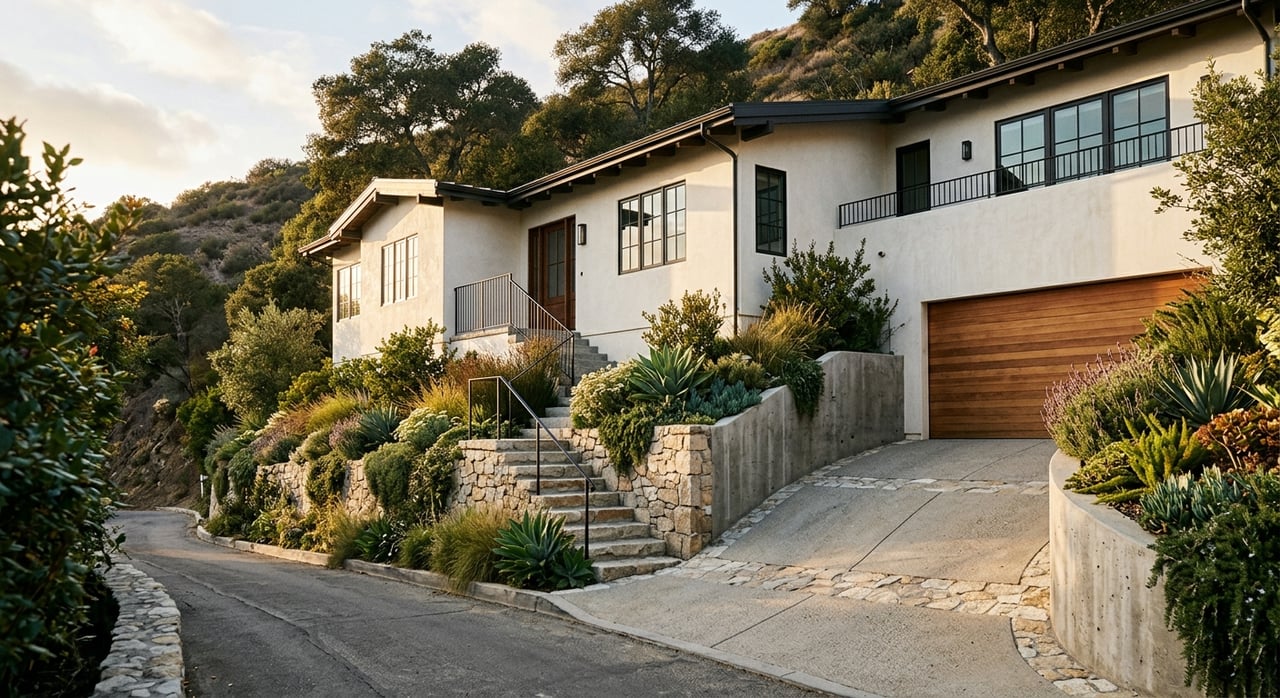
Buying in Beachwood Canyon can feel like falling in love at first sight. The architecture, the hillside setting, and the Hollywoodland history can make a home look unforgettable online. But if you are a first-time buyer here, the biggest issues often show up after the showing, which is why it helps to know what to look for before you write an offer. Let’s dive in.
Beachwood Canyon Is a Site-First Purchase
In many Los Angeles neighborhoods, buyers focus first on layout, finishes, and square footage. In Beachwood Canyon, you also need to study how the property actually works day to day.
A City of Los Angeles transportation report described upper Beachwood Drive as a narrow, substandard street with limited pedestrian space, parking on both sides, and congestion tied in part to visitors heading toward the Hollywood Sign. That means access is not a small detail here. It is part of the core value and livability of the home.
If you are buying your first place, try to think beyond the listing photos. A beautiful house can still be frustrating if the driveway is too steep, the garage is hard to use, or there is no easy way to turn around on the lot.
What to check on every showing
- Driveway slope and ease of entry
- Number of exterior stairs from curb to front door
- Whether a garage is truly usable for your car
- Space for deliveries, movers, and service vehicles
- Blind curves or tight approaches near the property
Access Can Affect Daily Life Fast
In Beachwood Canyon, topography shapes almost everything. Steep grades, curved roads, and hillside lots can change how easy it is to bring in groceries, host guests, schedule repairs, or even move furniture into the home.
City hillside guidance also treats grading, retaining walls, and drainage as central site issues. For you as a buyer, that means the land itself deserves as much attention as the house sitting on it.
This is one of the most common first-time buyer misses. You may be comparing kitchens and bathrooms when the more important question is whether the property functions smoothly on a normal Tuesday.
Smart questions to ask
- Can a moving truck reach the home without difficulty?
- Is there enough room for contractors or maintenance crews to access the site?
- Are curb access or parking areas shared or unusually tight?
- Are there records for grading, drainage, or retaining-wall work?
Parking Is Not Just a Convenience
In Beachwood Canyon, parking can shape your routine more than you expect. City materials have documented long-running parking pressure in the area, including impacts from visitors and hikers connected to the Hollywood Sign and Griffith Park.
For first-time buyers, this matters because street parking may not work the way it does in flatter parts of LA. Parking conditions can vary by block, and rules may include preferential or temporary restrictions.
If the home does not have a strong parking setup, think carefully about what that means for your lifestyle. A short driveway, no garage, or limited curb access can affect errands, guests, rideshares, and overnight parking for a second car.
Parking questions worth asking
- Does this block have preferential parking rules?
- Are there temporary restrictions at certain times?
- Where do guests realistically park?
- What is curb availability like on weekends and holidays?
- How do contractors, cleaners, or food deliveries typically stop at the property?
Historic Charm Often Comes With Tradeoffs
Much of Beachwood Canyon’s identity is tied to Hollywoodland, the 1923 development on the south-facing slope of Mt. Lee. The historic district is known for Period Revival architecture, curving streets, granite retaining walls and stairways, and mature vegetation.
The area’s homes were largely built between 1923 and 1939, with styles that include French Norman, English Tudor, Mediterranean, and Spanish Colonial Revival. That character is a major part of the appeal, especially if you are a design-minded buyer.
But older housing stock also means you should look carefully at what is original, what has been updated, and what may have been added later. A home can be full of charm while still carrying hidden maintenance or permit questions.
Look past the charm
When you tour a property, try to separate design appeal from practical condition. Original details may be wonderful, but older stairs, retaining walls, or site improvements can require more upkeep than first-time buyers expect.
It is also smart to ask whether additions, conversions, or exterior changes were permitted. In an area with historic character, exterior work may involve extra review depending on the property’s status.
Ask these before you move forward
- What features are original to the home?
- What renovations or additions were done later?
- Is there permit history for major exterior or interior changes?
- Are site features like retaining walls and stairs original, repaired, or replaced?
- Does historic status affect future exterior changes?
Inspections Should Focus on the Lot Too
A standard first-time buyer mindset often centers on roof, plumbing, electrical, and HVAC. In Beachwood Canyon, you also need your inspection process to focus on slope, drainage, retaining walls, and site stability.
Los Angeles guidance for hillside development highlights drainage systems, remedial grading, and retaining-wall standards as major concerns on steep lots. LADBS also states that grading permits are required for grading work in the hillside grading area.
That means a clean interior inspection is not the whole story. You want to know how water moves on the property, whether walls and drainage systems were permitted, and whether there are signs of settlement or slope movement.
Site issues that deserve close attention
- Cracks that may suggest settlement
- Signs of slope movement or shifting soil
- Poor drainage paths during heavy rain
- Retaining walls that appear stressed or altered
- Open, expired, or missing permits for site work
Questions for your inspector
- Is there a geotechnical report for the lot?
- Are there visible signs of settlement or slope movement?
- Were retaining walls, grading work, or subdrains permitted?
- Where does stormwater go during heavy rain?
- Are there open permits or unpermitted additions?
Fire Exposure Should Be Part of Your Due Diligence
Because Beachwood Canyon is a hillside area with steep slopes and mature vegetation, wildfire preparedness should be part of your review. CAL FIRE explains that fire hazard severity maps are based on factors such as vegetation, terrain, climate, embers, and fire history, and notes that fire can burn more quickly and intensely up steep slopes.
CAL FIRE guidance also calls for defensible space, including a 0 to 5 foot ember-resistant zone, a 30 foot lean, clean, and green zone, and up to 100 feet of fuel reduction depending on the parcel and local rules. For a buyer, that translates into ongoing maintenance and a need to understand the property’s current condition.
This does not mean every property will present the same level of concern. It does mean you should verify whether the parcel is in a fire hazard severity zone and what wildfire-hardening work has already been done.
What to verify before closing
- Whether the parcel is in a fire hazard severity zone
- Whether defensible space is currently maintained
- Condition of roof edges and nearby vegetation
- Presence of ember-resistant vents or similar hardening features
- What ongoing vegetation management may be needed after purchase
The Right First-Time Buyer Mindset
The biggest mistake in Beachwood Canyon is treating it like a typical starter-home search. Here, the setting is part of the purchase, and the setting comes with real day-to-day implications.
If you love architecture, hillside views, and historic character, this neighborhood can be a compelling fit. But the smartest buyers stay focused on the full picture: access, parking, slope, drainage, permits, and wildfire readiness, not just the finishes in the listing photos.
That is where local, detail-driven guidance matters. When you understand how a property functions in real life, you can make a more confident decision and avoid surprises after move-in.
If you are exploring Beachwood Canyon or other hillside neighborhoods in Los Angeles, Carolina Kramer can help you evaluate the details behind the design so your first purchase feels informed, strategic, and right for your lifestyle.
FAQs
What do first-time buyers in Beachwood Canyon overlook most often?
- Many first-time buyers focus on charm and views, but miss practical issues like driveway grade, stair access, parking limits, drainage, retaining walls, and how the lot functions every day.
Why is parking such a big issue for Beachwood Canyon buyers?
- City records show long-running parking pressure tied to visitor traffic near the Hollywood Sign and Griffith Park, so curb availability, block-specific restrictions, and guest parking can affect daily life more than buyers expect.
What should buyers ask about older homes in Beachwood Canyon?
- You should ask what is original, what has been renovated or added later, whether there is permit history for changes, and whether site features like stairs or retaining walls may need added upkeep.
What inspections matter most for a Beachwood Canyon home purchase?
- Along with standard home inspections, buyers should pay close attention to slope stability, drainage, retaining walls, grading permits, stormwater flow, and any signs of settlement or unpermitted work.
How should buyers think about wildfire risk in Beachwood Canyon?
- Buyers should verify whether a property is in a fire hazard severity zone, review defensible-space maintenance, and look for practical wildfire-hardening features such as ember-resistant vents and well-managed vegetation near the structure.