
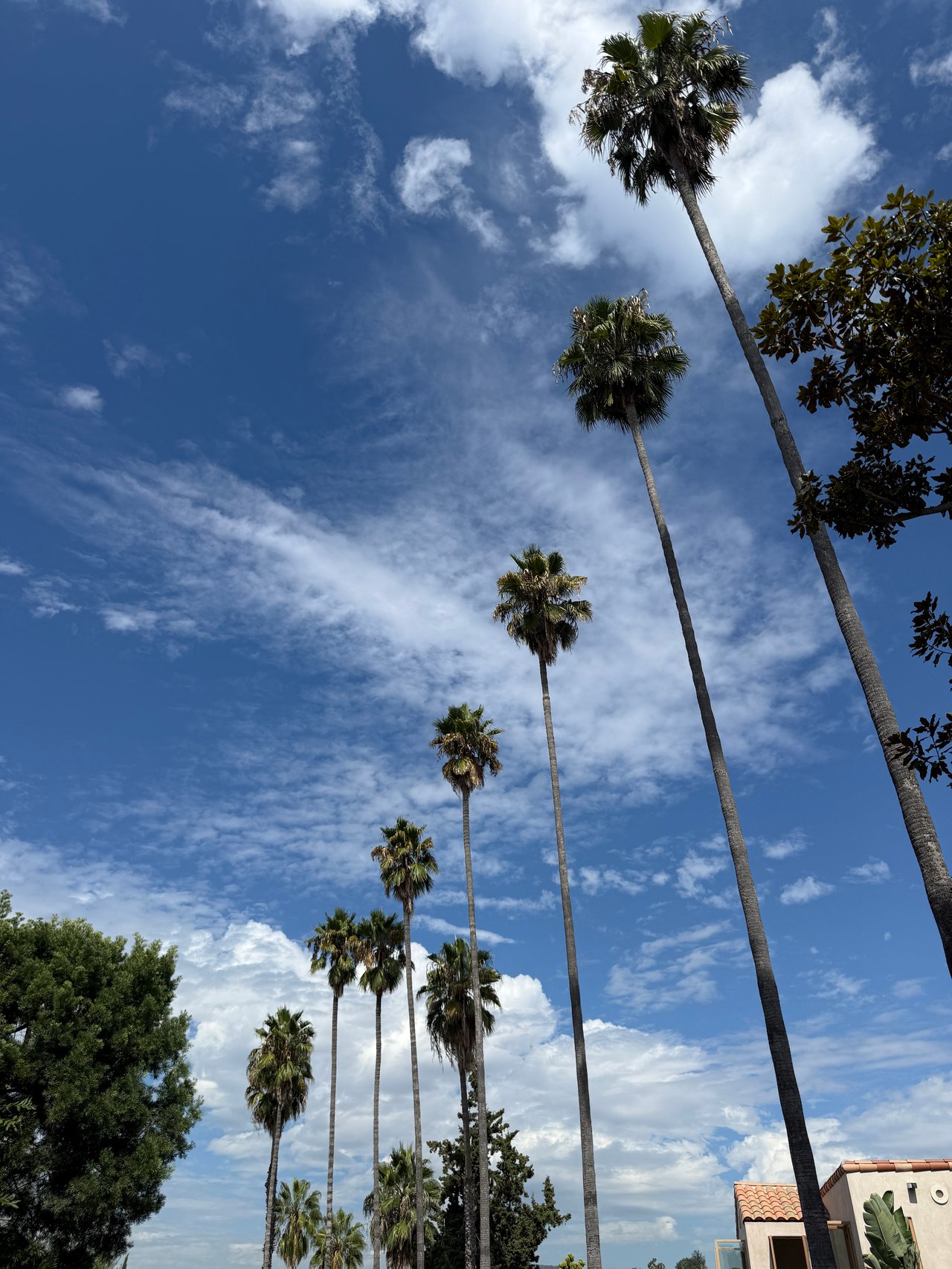
Larchmont Village is one of the most deliberately designed neighborhoods in Los Angeles — a half-square-mile enclave established in 1921 with homes, shops, and schools planned to be walkable from day one. A century later, that original plan still defines daily life here. Larchmont Boulevard between Beverly Boulevard and 3rd Street is lined with 50+ independent shops and restaurants, many owned by families who’ve run them for decades. Hancock Park’s mansions sit one block east. The neighborhood is tiny, centrally located, and — by LA standards — genuinely walkable. In 2026, it trades as a premium village-style address for buyers who value character and quiet.
Larchmont Village was established in 1921 by developer Julius LaBonte during LA’s early-20th-century westward expansion. Unlike the car-centric sprawl that defined most of the rest of the city, LaBonte designed Larchmont as a compact walkable neighborhood — homes, shops, and schools intentionally clustered in half a square mile. That design has held up remarkably well. Residents today complete daily errands, school drop-offs, and social routines on foot or by bike, rare for LA south of Wilshire. For broader context, see the Larchmont Wikipedia entry.
The spine of the neighborhood is Larchmont Boulevard, a tight commercial strip with a density of long-tenure independent businesses:
The character of the boulevard is part of what holds Larchmont’s premium — it’s what buyers are paying for, alongside the residential blocks.
Larchmont Village’s residential stock is concentrated in the 1920s and 30s, with Spanish Revival, Tudor, Craftsman, and Traditional homes dominating. Most homes sit on small lots by Westside standards — but the blocks are mature, the streets are tree-lined, and the walkability premium is real. A thin layer of newer contemporary builds has been added over the decades, usually as careful infills that respect the scale of the original grid.
Typical 2026 price bands: small character homes and condos $1.2M-$1.8M; classic Spanish or Tudor single-family $1.8M-$3M; larger restored homes and premium blocks $3M-$5M+. Pricing is substantially higher than it would be for similar square footage in less walkable Mid-City neighborhoods — the walkability and village character are paid for directly.
Larchmont Village is inseparable from its eastern neighbor, Hancock Park — the historic mansion district anchored by the Windsor Square and Hancock Park residential associations. Many Larchmont residents describe living "in the village" as distinct from "in Hancock Park," but the two neighborhoods share commercial amenities, schools, and social rhythms. Buyers often evaluate them together: Hancock Park is the grand architecture and large lots; Larchmont is the walkable village. Both share the same central LA geography and many of the same strengths and trade-offs.
The Larchmont market is small-inventory by definition — there simply aren’t that many homes in a half-square-mile area, and turnover is historically low. That makes timing material for both buyers and sellers. For buyers: being on the list, ready to move, and clear on what you’re looking for is how listings here get won. For sellers: the Larchmont premium is real, and well-positioned character homes command pricing power that portals don’t automatically model.
Moving into a Larchmont home? Our stress-free moving guide covers the practical logistics.
Buyers considering Larchmont usually weigh:
Larchmont is the answer when walkability, character architecture, and village rhythm are all priorities — and you’re willing to accept small inventory and premium pricing to get them. Hancock Park fits if you want grander scale. Melrose fits if you prefer more commercial energy.
Whether you’re buying your first Larchmont home, selling a long-held village property, or just trying to figure out whether the neighborhood fits your next chapter, I’d love to help. Browse the current Larchmont Village listings above, or reach out directly for a conversation about your timeline, your goals, and what the current market is doing.
Yes. The neighborhood covers about half a square mile, and homes, shops, and schools were planned close together; residents still run errands and get around on foot or by bike.
Most of the housing dates to the 1920s and 1930s, with Spanish Revival, Tudor, Craftsman, and Traditional homes. Lots are generally small by Westside standards, and there are some newer contemporary homes.
The description’s typical 2026 price bands are $1.2 million to $1.8 million for small character homes and condos, and $1.8 million to $3 million for classic Spanish or Tudor single-family homes. Larger restored homes and homes on premium blocks are listed at $3 million to $5 million or more.
The stretch between Beverly Boulevard and 3rd Street has more than 50 independent shops and restaurants. It includes Chevalier’s Books, Larchmont Village Wine, Spirits & Cheese, coffee shops, boutiques, and other services.
It runs Wednesday afternoons from 1 to 5 p.m. and Sunday mornings from 10 a.m. to 2 p.m.
Hancock Park is immediately east and has larger lots and grander homes, with higher average pricing. Larchmont has the more walkable village setting, and the two neighborhoods share commercial amenities.
Inventory is limited: the neighborhood is only about half a square mile, and turnover has historically been low. That means the timing of a listing matters if you’re looking to buy here.
The Melrose corridor to the north has more commercial density and nightlife, along with more attainable pricing. Larchmont has a quieter, more traditional village feel.