
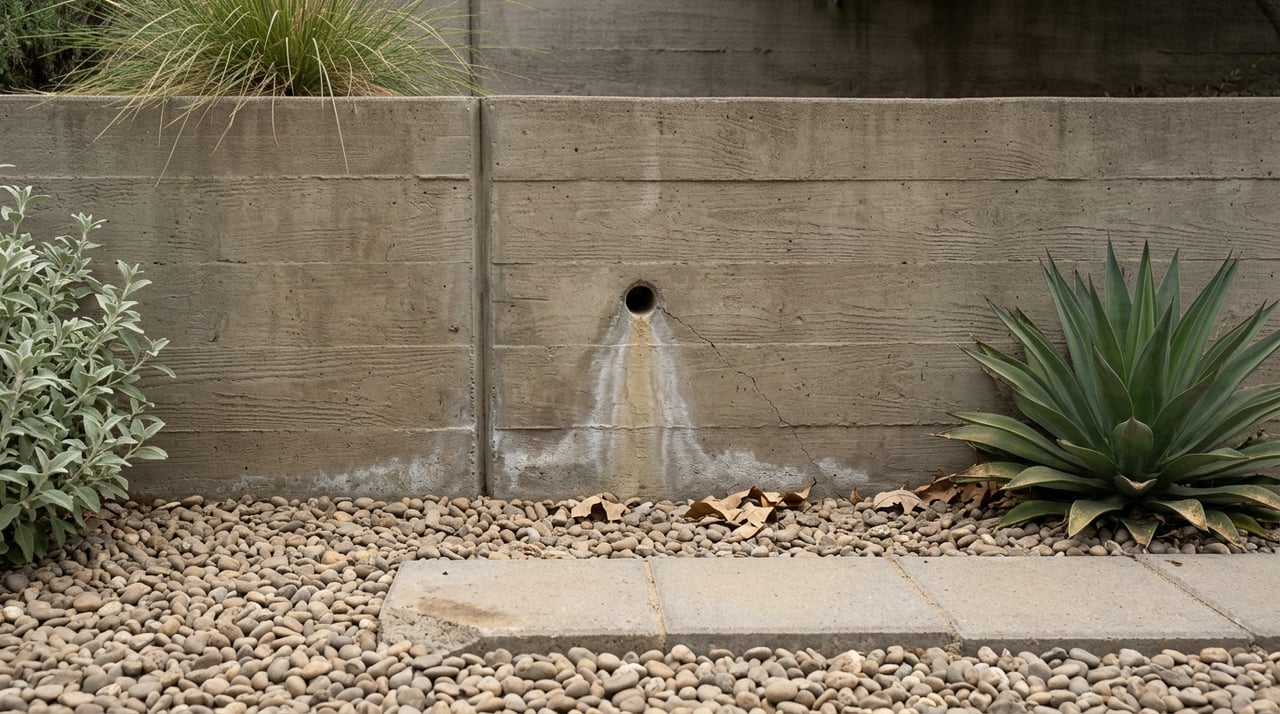
Two hillside homes can sit two blocks apart in Silver Lake, share a similar footprint, a similar vintage, a similar slice of city view, and still close tens of thousands of dollars apart. The gap rarely comes down to the kitchen or the finishes. It comes down to a folder: whether the retaining wall holding up the yard was ever engineered, whether the additions have final sign-off, and whether anyone has looked at what the soil under the house is actually doing.
If you are getting ready to write an offer on a hillside property here, that folder matters more than it used to. Buyers in 2026 are reading it earlier, reading it harder, and using what they find in it to negotiate.
What The Slope Actually Requires
Silver Lake was laid out around its hills rather than against them, and a meaningful share of the housing stock dates to the 1920s and 1930s, when homes climbed the slopes above stair streets that once connected residents to long-gone streetcar lines. That timeline matters for one specific reason: the City of Los Angeles didn't adopt its modern hillside grading ordinance until 1963. Any retaining wall built before that date, and there are plenty on Silver Lake's older parcels, may have gone in without engineering, without inspection, and without a drainage system behind it.
Today, the rules are considerably more specific. Los Angeles Municipal Code Division 70, Section 91.7006, requires a soils and geology investigation before the city issues permits for new construction or major additions on hillside parcels. A building over 500 square feet on a hillside lot needs a preliminary geology and soils report at least ten days before permit issuance, and any grading job over 1,000 cubic yards triggers the same requirement. On top of that baseline, parts of Silver Lake fall inside a Hillside Construction Regulation District under LAMC Section 13.20, which layers stricter grading and hauling standards on top of the ordinary hillside rules. Coverage isn't neighborhood-wide. It depends on the parcel, which is exactly why pulling the record for a specific address matters more than assuming the rules are uniform.
When an inspector or engineer reviews a hillside file, they are typically looking for a short, consistent list of red flags:
- Slope movement or cracked hardscape that trails downhill from the house
- Moisture staining at the base of retaining walls
- Drainage that was never properly engineered behind a wall
- Fill material conditions that a visual walkthrough can't reveal
- Permit records that don't match what's actually built
Any one of these can surface during a routine inspection. All of them are the kind of finding that shows up more often on a slope than on a flat lot, and none of them are visible from a listing photo.
Why This Has Become A 2026 Habit, Not A 2026 Exception
Silver Lake's market this year gives buyers a reason to look harder before they remove contingencies. As of July 2026, the neighborhood carried a median list price near $1,695,000 with active inventory in the high 60s, while the median closed sale price for that month sat closer to $1,595,000 with homes averaging around 34 days on market. In May 2026, the neighborhood recorded 92 closed sales, up 45.7% year over year, at a median price near $1.4 million. Competition for well-positioned homes stayed strong, with the neighborhood's overall market scoring in the high 70s on a 100-point competitiveness scale and desirable listings still drawing multiple offers.
That's a market with real demand, but it is not a market where every home behaves the same way. In the first quarter of 2026, homes that went into contract within their first 14 days closed at a median of roughly 8.6% above asking, while homes that lingered past 30 days closed around 3% below. A ten-point spread on the same street, in the same quarter, is not explained by taste in tile. It's explained by how a home is positioned going into escrow, and for hillside properties, the file is a large part of that positioning.
Here's the mechanism in table form:
| What buyers now check | What it can reveal | What it becomes in escrow |
|---|---|---|
| LADBS permit history | Whether additions, decks, or ADUs have final sign-off | Leverage or a credit request if gaps exist |
| Soils or geotechnical report | Slope movement, drainage failure, fill conditions | A negotiating document, not just a technical one |
| Natural Hazard Disclosure Statement | Earthquake-induced landslide, liquefaction, or fault zones | A required disclosure that shapes lender comfort |
| Retaining wall engineering records | Whether a wall meets Baseline Hillside Ordinance standards | Repair cost estimates that get built into price talks |
The Streets Where This Surfaces First
Certain pockets of Silver Lake see this pattern more than others, largely because of when and how they were built. Older hillside sections around Micheltorena Hill and Moreno Highlands, and streets like Redesdale Avenue, Rotary Drive, and Micheltorena Street itself, carry a mix of pre-1963 construction and later remodels layered on top of it. That combination is exactly where a buyer's engineer is most likely to find a wall that was never permitted, or an addition that doesn't match the file at the LADBS counter.
None of this means a home in these areas is a bad buy. It means the paperwork deserves the same attention as the layout and the light.
A wall doesn't just hold up a yard on a slope like this. In a hillside sale, it holds up the price too.
What The Report Actually Buys You At The Table
A geotechnical report commissioned during your inspection period does something a general home inspection can't. It can surface drainage problems, slope movement, expansive soils, or fill conditions that no walkthrough would catch, and unlike a repair estimate, it functions as a negotiating document rather than a simple diagnosis. Before you get that far, California Geological Survey's EQ Zapp tool lets you check whether a specific parcel falls inside a mapped zone for fault rupture, liquefaction, or earthquake-induced landslides, which is a useful early screen before you write an offer at all.
If a report turns up a real issue, the cost conversation escalates in a predictable way. A structural engineer's site evaluation and letter report on a straightforward wall typically runs in the low four figures. When that evaluation escalates into a full geotechnical investigation, the cost moves into five figures, and that jump is itself informative: it means the real question is no longer about the wall, but about the ground underneath it. On the repair side, a standard brace-and-bolt retrofit for a cripple wall runs $5,000 to $10,000, while hillside homes with more complex foundations typically land between $7,000 and $20,000 for basic reinforcement, and can climb to $20,000 to $60,000 for major foundation work. Those figures are exactly what documented wall issues are turning into in escrow this year: five-figure credit requests, and larger where drainage is implicated.
A Practical Sequence For Hillside Due Diligence
If you are ready to write an offer on a Silver Lake hillside home, this is the order that actually protects your position:
- Pull the LADBS permit history for the address and compare it to what you see on your walkthrough.
- Check the parcel against EQ Zapp for mapped fault, liquefaction, or landslide zones before you get emotionally invested in the house.
- Ask the seller directly whether a soils or geotechnical report exists, and request it during your inspection period if it does.
- If none exists and the property shows any grading, terracing, or visible wall age, order your own geotechnical review before removing contingencies.
- If the report finds slope movement or an unengineered wall, use the estimate range for repair as your basis for a credit request or price adjustment, not as a reason to walk unless the numbers genuinely change your budget.
What This Means If You're Ready To Move
The hillside homes performing best in this market right now aren't necessarily the ones with the most dramatic views. They're the ones where a buyer's engineer can open the file and find what they expect to find: permits that match the structure, a wall that was engineered when it was built, and disclosures that were completed honestly. That file is now part of how the home gets underwritten, by the buyer's own reasoning and often by the lender's.
Frequently Asked Questions
Is a soils report legally required to buy a hillside home in Silver Lake? Not for the purchase itself. It becomes required by the city when new construction, a major addition, or significant grading is planned. For a straight purchase, ordering one during your inspection period is a due-diligence choice, but on any parcel with visible grade, past drainage work, or an older retaining wall, it has become a routine buyer request in 2026.
Does every Silver Lake hillside home fall under the stricter HCR District rules? No. The Hillside Construction Regulation District applies by specific community plan area and ordinance, and coverage depends on the individual parcel rather than the neighborhood as a whole. Confirming status for a specific address is part of a thorough due-diligence process.
What does it cost to get a professional opinion before I remove contingencies? A structural engineer's site evaluation on a straightforward retaining wall typically runs in the low four figures. If that evaluation points to a full geotechnical investigation, plan for a cost in the five figures, since that step means the underlying ground, not just the wall, needs a closer look.
Buying on a slope in Silver Lake means the home you fall for and the file behind it are two separate evaluations, and both deserve real attention before you write an offer. If you're weighing a hillside purchase here and want a second set of eyes on the permit history, the disclosures, or what a soils report might mean for your negotiating position, Carolina Kramer can walk you through it before you're locked into a contingency deadline. Explore Properties to see what's currently active on Silver Lake's hillside streets.